
Articles
Bridging Physical and Digital Worlds: The Intelligence of Digital Twins
The digital twin revolution: key insights
The impact is clear: reduced costs, enhanced safety protocols and efficiency gains that are reshaping industry standards.
Digital Catapult is accelerating this transformation by helping early-stage deep tech businesses access the advanced facilities, investment support, and industry partnerships they need to scale their solutions.
This technology isn’t just changing how equipment is maintained and operated – it’s fundamentally transforming how we think about the future of industrial operations.
The intelligence layer: what makes digital twins smart
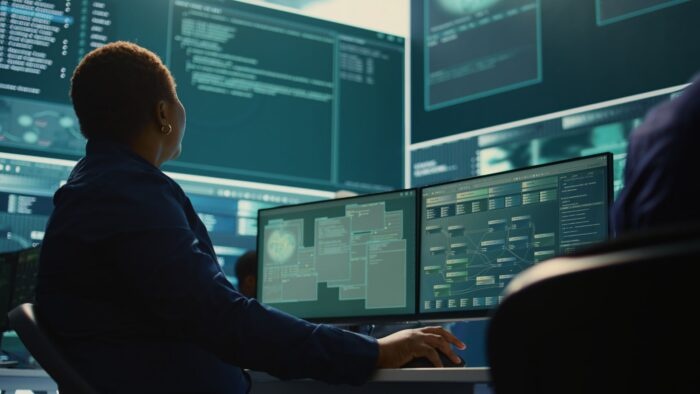
A digital twin is a dynamic virtual representation of a physical asset, process, or system, bridging the physical and digital worlds. Digital twins turn data into real-time insights that can optimise performance, reduce costs, and predict outcomes.
Think of it as creating a digital counterpart that lives alongside its physical twin, mirroring changes in real time, using intelligence to generate actionable insights, and augmenting asset performance based on those insights.
For example, imagine a jet engine cruising at 35,000 feet. Hundreds of sensors generate data every second, feeding information to its digital twin on the ground. The twin processes this stream continuously, detecting subtle variations that human operators might miss. When it identifies an unusual vibration pattern, it doesn’t simply raise an alert – it predicts when the issue may escalate and recommends preventative action before it becomes critical.
This intelligence layer is the beating heart of modern digital twins. By combining real-time data from sensors, IoT devices and enterprise systems, digital twins evolve from static replicas into adaptive systems that learn and improve over time.
Designing AI systems: the frameworks of tomorrow
Creating an intelligent digital twin requires three core components: data streaming from the physical world (the eyes and ears), AI algorithms that process that data (the brain), and automation systems that act on insights (the hands).
Selecting the right AI or machine learning model is critical. Supervised learning may be used to predict equipment failures, while unsupervised learning can detect anomalies. Edge computing further enables real-time decision-making without reliance on cloud infrastructure, ensuring rapid responses in mission-critical environments.
Integrating digital twins with enterprise systems such as ERP and CRM platforms ensures insights are actionable, while continuous feedback loops enable ongoing learning and increasing accuracy over time.
Real-world impact: aerospace, maritime and defence
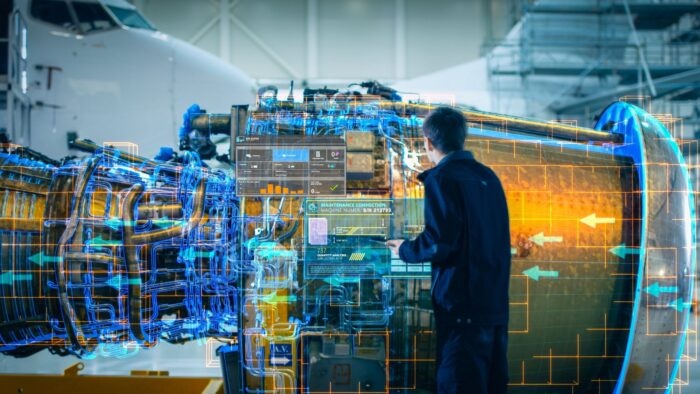
The true power of intelligent digital twins emerges in real-world application. In aerospace, Rolls-Royce’s intelligent engine twins analyse patterns across millions of flight hours to identify potential issues weeks before traditional systems would detect them. Insights from one engine become shared intelligence across an entire fleet, creating a continually learning system.
In the defence sector, predictive analysis supports decision-making in highly complex and uncertain environments. Human digital twins, for example, use continuous monitoring of health indicators and behavioural data to predict medical risks, recommend personalised care strategies, and map future health outcomes.
In the maritime sector, digital twins are being used to support autonomous shipping. An autonomous vessel equipped with digital twin technology can monitor its own condition, understand its surroundings, and make operational decisions. Research in ocean engineering shows how advanced algorithms can enhance fault diagnosis, estimating fault parameters and reliably identifying issues in autonomous ships.
Future directions: the quantum leap forward
The future of digital twins holds significant promise. The integration of quantum computing could enable digital twins to solve complex simulations and optimisation problems far faster than conventional systems. By processing multiple scenarios simultaneously, quantum-enhanced twins could dramatically accelerate decision-making in sectors such as logistics, aerospace and healthcare.
Virtual and augmented reality will further transform interaction with digital twins, allowing engineers to immerse themselves inside virtual systems, manipulate components using natural gestures, and test modifications before applying them in the real world.
As adoption grows, cross-platform standardisation will become increasingly important. Initiatives such as the Digital Twin Consortium are working towards universal standards that enable interoperability and collaboration across industries.
The UK Digital Twin Centre, delivered by Digital Catapult and funded by Belfast Region City Deal and Innovate UK, is making digital twins more accessible and meaningful. By fostering collaboration and providing access to expertise, facilities and secure foundations, the Centre empowers organisations to unlock the full potential of digital twin technologies.
Conclusion: your digital twin journey
Digital twins are becoming the bridge between the physical and digital worlds. As they continue to evolve – driven by advances in AI, quantum computing and immersive technologies – they will play an increasingly critical role across industries.
Digital twins are not only transforming how systems are monitored and maintained; they are reshaping how organisations plan for the future. By embracing intelligent digital twins, businesses can unlock new efficiencies, reduce costs and build more resilient operations.
The question is not whether digital twins will shape your industry, but how quickly that transformation will happen.
If your organisation is exploring the potential of digital twins, get in touch to learn how we can help accelerate your innovation and turn advanced digital twin concepts into real-world impact.


.png)


